




Stainless steel ball valve for a new chemical processing line: The supplier asks, “304 or 316? Full port or reduced? PTFE or RPTFE seats?” You hesitate, aware that a wrong choice could mean early failure, leaks, or even a safety issue.
I’ve seen costly shutdowns from picking 304 instead of 316L in chloride-rich environments. PTFE seats have failed at 380°F, despite the 450°F data sheet limit. These real-world failures shaped my approach in two decades in the valve industry.
After 20 years of designing valve systems, I created a framework to make selection easier. This guide explains how to choose materials, ratings, seat types, and port configurations, using real examples from my experience.
Here’s what you’ll learn:
- Exact decision tree for choosing 304 vs 316/316L based on your service conditions
- How to properly de-rate pressure classes by temperature (most engineers get this wrong)
- Seat material comparison with real-world temperature and chemical compatibility limits
- The three installation mistakes that cause 80% of early valve failures
- 5 FAQ based on questions I get from engineers I’ve trained
Even after 20 years in the field, I still see the same specification mistakes. Let’s work on fixing them.
Stainless steel ball valve cross-section showing ball, PTFE seats, stem, and body assembly
What is a Stainless Steel Ball Valve?
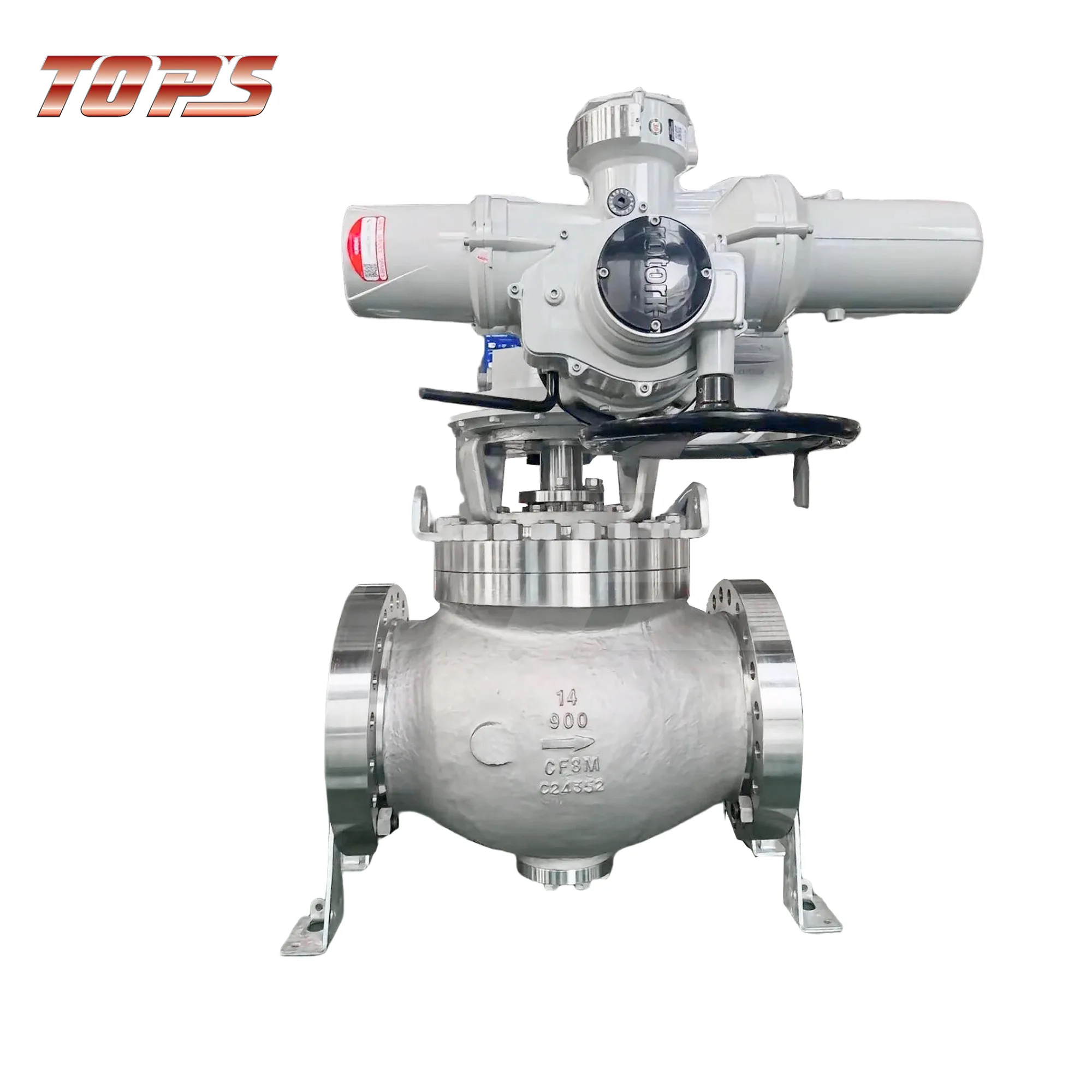
A stainless steel ball valve is a quarter-turn shut-off valve using a spherical disc (the “ball”) with a hole through its center to control flow. When rotated 90°, the ball either aligns with the pipe (open) or blocks it (closed).
These valves are used in systems that need frequent on/off control, can handle high pressure, or must resist corrosive fluids. You’ll find them in chemical plants, oil refineries, water treatment, food processing, and HVAC. Stainless steel resists corrosion better than brass or carbon steel.
In 2023, we replaced 47 gate valves with stainless ball valves on seawater lines at an offshore platform. The cycle time dropped from 45 seconds to just 3 seconds per operation. This speed is a big reason why ball valves are so standard in industry today.
Why Stainless Steel Over Other Materials?
Corrosion Resistance: The chromium content (minimum 10.5%) forms a passive chromium oxide layer that protects against oxidation and many corrosive chemicals.
Temperature Range: Stainless steel handles extreme temperatures from cryogenic service (-320°F for LNG applications) up to high-temperature applications (800°F continuous service for 316 SS).
Sanitary Applications: Type 316L stainless steel meets FDA requirements for pharmaceutical and food/beverage processing, making it the standard for clean industries.
Strength: Higher allowable stress values than brass enable higher pressure ratings in compact designs.
Many engineers believe stainless steel can’t corrode, but that’s not true. I’ve seen 316 stainless pit in 140°F chlorinated water with over 200 ppm chloride. Stainless resists oxidation, but chlorides, sulfides, and low-pH can still cause damage. Always check the chemistry data instead of guessing.
Stainless Steel Grades: 304 vs 316 vs 316L
The material grade you pick will affect how long your valve lasts. Here’s how to make the right choice.
Grade 304 Stainless Steel
304 is the most common austenitic stainless steel. It has about 18% chromium and 8% nickel. You’ll find it in about 60% of stainless steel uses as a general-purpose grade.
When to use 304: Clean water systems, compressed air, non-corrosive gases, mild chemical service, and food/beverage applications where chloride levels remain minimal.
I chose 304 ball valves for a brewery’s CIP system that used 180°F caustic cleaning solution. Five years later, there were no corrosion problems. It worked because the water supply had less than 50 ppm chloride, and the pH-controlled caustic didn’t harm the protective layer.
Choose 304 when:
- Chloride concentration stays below 100 ppm
- Indoor, dry environments with minimal atmospheric corrosion
- Budget-sensitive projects (304 costs 20-30% less than 316)
- Non-welded construction in moderate service
Grade 316 and 316L Stainless Steel
316 has 2-3% molybdenum, which makes it more resistant to chlorides and acids. 316L has lower carbon content (0.03%), which helps reduce problems during welding.
When to use 316/316L: Marine environments, coastal installations, chemical processing, pharmaceutical manufacturing, and any high-chloride or acidic service.
Here’s an example of a costly mistake: In 2016, a chemical plant used 304 ball valves on a 15% sulfuric acid line to save money. After 8 months, intergranular corrosion caused a flange leak. The emergency shutdown, cleanup, and valve replacement were expensive. We replaced all the valves with 316L, and they’re still working perfectly seven years later.
Choose 316/316L when:
- Chloride levels exceed 100 ppm (seawater contains ~19,000 ppm)
- Acidic media with a pH below 5
- Coastal or marine environments (salt spray attacks 304)
- Any welded construction (always specify 316L to prevent weld decay)
- Pharmaceutical applications (FDA strongly prefers 316L for injectable drug contact)
Material Comparison Table
| Parameter | 304 SS | 316 SS | 316L SS |
|---|---|---|---|
| Corrosion Resistance | Good (general use) | Excellent (chlorides/acids) | Excellent (chlorides/acids) |
| Chloride Tolerance | < 100 ppm | > 500 ppm | > 500 ppm |
| Welding Behavior | Sensitization risk | Sensitization risk | Weld-safe (low carbon) |
| Relative Cost | Baseline | +25-30% | +25-30% |
| Temperature Range | -320°F to 1500°F | -320°F to 1500°F | -320°F to 1500°F |
| Typical Applications | Water, air, food/beverage | Marine, chemical, pharma | Welded pharma, high-purity systems |
The Decision Framework
IF chloride > 100 ppm OR pH < 5 OR marine/coastal environment
THEN use 316/316L (always 316L if welding is involved)
ELSE IF budget-constrained AND chloride < 50 ppm AND indoor environment
THEN 304 is acceptable
ELSE
THEN default to 316L (insurance against unknown conditions)
After working on over 200 projects, my rule is simple: if you’re not sure, pay the extra 25% for 316L. I’ve never regretted choosing a higher grade, but I have regretted going with a lower one—three times, and each time it was costly.
Pressure Ratings & Temperature Limits (How to Size Properly)
Most engineers misunderstand pressure class ratings. Let me clarify what those numbers actually mean.
Understanding Pressure Classes
Pressure class (150#, 300#, 600#, etc.) does not mean maximum PSI. It’s an ANSI/ASME rating based on pressure-temperature curves. The actual rating goes down as the temperature increases.
Spec error: You need 400 PSI steam at 650°F. Class 150 says 285 PSI at ambient, but at 650°F, it’s only 140 PSI. Class 300 is required.
Here’s a safety incident that almost happened in 2019: A technician replaced a failed Class 300 valve with a cheaper, same-size Class 150 valve. Three weeks later, the stem blew out under 380 PSI at 550°F steam. The Class 150 valve was only rated for 75 PSI at that temperature. The technician didn’t realize how pressure ratings change with temperature. Luckily, no one was hurt.
Pressure-Temperature De-Rating Table for 316 SS Ball Valves (ANSI B16.34)
| Pressure Class | 100°F (PSI) | 400°F (PSI) | 650°F (PSI) | 800°F (PSI) |
|---|---|---|---|---|
| 150# | 285 | 260 | 140 | 75 |
| 300# | 740 | 675 | 355 | 190 |
| 600# | 1480 | 1350 | 710 | 380 |
| 900# | 2220 | 2025 | 1065 | 570 |
| 1500# | 3705 | 3375 | 1775 | 950 |
| 2500# | 6170 | 5625 | 2960 | 1585 |
Temperature Limits: The Real Constraints
Body material limits: Type 316 stainless steel bodies handle -320°F (cryogenic LNG service) up to 800°F continuous operation. Above 800°F, you need high-alloy materials like Alloy 20 or Hastelloy.
Seat material limits (this is the real bottleneck):
Valve bodies might handle up to 800°F, but PTFE seats, rated at 450°F, are usually the absolute limit. The seat material often sets the maximum temperature.
| Seat Material | Max Temp (Continuous) | Max Temp (Short-term) | Chemical Compatibility |
|---|---|---|---|
| PTFE (Teflon) | 450°F | 500°F | Excellent (except molten alkali metals, fluorine gas) |
| RPTFE (Reinforced) | 500°F | 550°F | Excellent + abrasion resistance |
| PEEK | 480°F | 520°F | Excellent + high mechanical strength |
| Metal-Seated (Stellite) | 1000°F+ | 1200°F+ | Good (no soft sealing for slurries) |
| Devlon (Nylon) | 200°F | 220°F | Good for water, mild chemicals only |
A ball valve rated for 450°F started leaking during thermal cycling between 80°F and 380°F every four hours. The PTFE seats suffered from cold-flow. Switching to RPTFE fixed the problem. The lesson: static temperature ratings don’t always work for cycling service.
The 3-Step Selection Process
Step 1: Identify your maximum operating pressure AND maximum operating temperature.
Step 2: Find the intersection on the pressure-temperature table. Select the pressure class where the de-rated PSI exceeds your requirement by at least 20% (safety margin).
Step 3: Verify your seat material can handle the temperature. If your service temperature exceeds 450°F, eliminate PTFE from consideration immediately.
Seat Materials: PTFE vs RPTFE vs Metal Seats (What Fails & Why)
The seat material determines your sealing performance, temperature capability, and service life. Here’s what actually happens in the field.
PTFE (Polytetrafluoroethylene) Seats—The Standard
Virgin PTFE seats are soft, self-lubricating, and chemically resistant. They are used in about 90% of stainless ball valves.
Best applications: Water service below 400°F, natural gas, light chemical duty, clean fluids without abrasive particles.
A plant used PTFE-seated valves for 220°F hot water. After 18 months, the seats compressed by 0.015 inches and started leaking. PTFE tends to cold-flow when exposed to heat and pressure.
When PTFE works perfectly: Ambient to 400°F service, pressures below 600 PSI, clean media, and infrequent thermal cycling.
When PTFE fails: Abrasive slurries (seats wear through), frequent thermal cycling (cold-flow from expansion/contraction), steam service above 350°F (thermal degradation), and high-pressure service above 1000 PSI (compression).
RPTFE (Reinforced PTFE) Seats—The Upgrade
RPTFE incorporates 15-25% glass fiber, carbon fiber, or other fillers into the PTFE matrix. This dramatically increases compressive strength and reduces cold-flow.
When to specify RPTFE: Any application where standard PTFE failed from compression, abrasion, or higher temperatures up to 500°F.
I changed a cooling water system from PTFE to RPTFE seats after several failures. The system used dirty river water at 140°F with sand particles. PTFE seats wore out in 6 months, but RPTFE seats with glass fiber lasted over 4 years. The extra abrasion resistance made a big difference.
Choose RPTFE when:
- Service temperatures range from 400-500°F
- Abrasive media present (slurries, dirty water, catalyst particles)
- High cycling frequency (automated control valves)
- You need better dimensional stability than PTFE provides
RPTFE seats usually cost about 30% more than PTFE, but their longer service life makes the extra cost worth it.
Metal Seats (Stellite, Monel)—The Heavy-Duty Option
Metal seats use hard-faced alloys (typically Stellite, a cobalt-chromium-tungsten alloy) or nickel alloys (such as Monel). They provide zero cold flow and can withstand extreme temperatures where polymers fail.
When metal seats are mandatory: Steam service above 600°F, cryogenic applications (LNG at -260°F), abrasive slurries in mining, and fire-safe requirements (API 607/API 6FA).
On an offshore platform I worked on, the system operated at 850°F superheated steam. PTFE would melt, and RPTFE would break down. Only metal-seated ball valves could handle these conditions. The ball and seat rings are carefully matched to create a metal-to-metal seal.
Trade-offs you must accept:
- Operating torque increases by 10x compared to PTFE (you’ll need larger actuators)
- Sealing classification drops from Class VI (bubble-tight) to Class IV (minimal leakage allowed)
- Potential for galling if dissimilar metals aren’t selected carefully
- Cost premium of 200% or more versus PTFE-seated equivalents
When to use metal seats:
- Service temperature exceeds 600°F
- Cryogenic service below -100°F
- Fire-safe certification required (API 607 testing)
- Abrasive slurries where RPTFE still wears too quickly
Seat Material Comparison Table
| Seat Type | Max Continuous Temp | Sealing Class | Abrasion Resistance | Relative Cost | Best Applications |
|---|---|---|---|---|---|
| PTFE | 450°F | Class VI (bubble-tight) | Low | Baseline | Clean water, gas, light chemicals |
| RPTFE | 500°F | Class VI (bubble-tight) | Medium-High | +30% | Dirty fluids, thermal cycling, moderate abrasion |
| PEEK | 480°F | Class VI (bubble-tight) | High | +60% | High pressure, chemical resistance + temp |
| Metal (Stellite) | 1000°F+ | Class IV (minimal leak) | Very High | +200% | High temp steam, fire-safe, cryogenic, severe slurry |
| Devlon | 200°F | Class V | Medium | -20% | Cold water only, budget applications |
Industry Applications & Real-World Use Cases
Different industries have specific requirements that drive material and design choices.
Oil & Gas (Upstream, Midstream, Downstream)
Service conditions: High pressure up to 10,000 PSI, sour gas containing H₂S, seawater injection, produced water with chlorides and CO₂.
Material selection strategy:
- Sour service (H₂S present): 316L with NACE MR0175 compliance (hardness limits to prevent sulfide stress cracking)
- Seawater injection: 316L minimum, but super duplex stainless (2507) preferred for offshore platforms
- High-pressure gas: Class 600 to 2500 with RPTFE or metal seats
Real project example: West Texas oil field, sour gas processing with H₂S concentrations around 15%. I specified 316L Class 600 ball valves with RPTFE seats and NACE-compliant hardness testing. Seven years later: zero failures. A competitor used 304 Class 300 valves on a similar field—they replaced 15 valves in Year 2 due to pitting corrosion and pressure rating inadequacy.
Chemical Processing
Service conditions: Concentrated acids, caustic solutions, chlorinated solvents, high temperatures, thermal cycling from batch processes.
Material guidance by chemical:
- Hydrochloric acid (< 10% concentration): 316L adequate
- Sulfuric acid (< 60%): 316L acceptable; above 60%: consider Alloy 20 or Hastelloy
- Chlorinated solvents: 316L body with RPTFE seats (PTFE resists chlorinated organics)
- Caustic soda (NaOH): 316L with PTFE seats (caustic doesn’t attack PTFE; metal seats would gall from scaling)
Real example: A plant processing 50% caustic soda (sodium hydroxide) at 200°F asked about seat material. I recommended 316L bodies with PTFE seats. Why PTFE instead of metal? Caustic doesn’t degrade PTFE; the temperature was manageable at 200°F, and metal seats would suffer from caustic scale buildup, causing galling, yet after five years in service, it still seals perfectly.
Pharmaceutical & Food/Beverage
Requirements: Sanitary design per 3A and ASME BPE standards, FDA compliance, CIP/SIP compatibility (clean-in-place, sterilize-in-place), surface finish specifications.
Critical specifications:
- Material: 316L only (FDA preference for drug-contact surfaces)
- Surface finish: Electropolished to Ra < 15 microinches (prevents bacterial harbor points)
- End connections: Tri-clamp (hygienic quick-connect) instead of flanged
- Seats: PTFE or PEEK compatible with 275°F steam sterilization
- Stem seals: Must tolerate 3% hydrogen peroxide SIP cycles
Real FDA audit experience: An injectable drug manufacturing facility specified 316L electropolished ball valves with tri-clamp ends, PTFE seats, and EPDM stem seals compatible with H₂O₂ sterilization. They passed FDA inspection on the first audit. The key detail: specifying stem seal material compatible with oxidizing sterilants (standard EPDM would degrade from peroxide exposure).
Water & Wastewater Treatment
Service conditions: Chlorinated potable water, variable pH in wastewater, budget constraints for municipal projects, and high cycle counts from automated control.
Material selection:
- Potable water (< 2 ppm free chlorine): 304 acceptable for indoor installations
- Potable water (coastal or aggressive): 316L safer choice
- Wastewater (variable unknown chemistry): 316L for insurance
- High-cycle automated valves: RPTFE seats to prevent compression failure
Municipal project mistake: A city water treatment plant installed 150 ball valves on chlorinated water service (1.5 ppm Cl₂). They specified 304 to save budget. After 10 years, crevice corrosion appeared around the stem threads and body joints. The replacement cycle began. If they’d specified 316L initially (25% cost premium), the expected service life would have been 25+ years. The long-term cost of premature replacement exceeded the initial savings.
Application Summary Table
| Industry | Preferred Grade | Typical Seat Material | Pressure Class | Special Requirements |
|---|---|---|---|---|
| Oil & Gas | 316L / Super Duplex 2507 | RPTFE / Metal | 600-2500# | NACE MR0175, API 6D, fire-safe API 607 |
| Chemical Processing | 316L / Alloy 20 | RPTFE / PTFE | 150-600# | Chemical compatibility verification is required |
| Pharmaceutical | 316L only | PTFE / PEEK | 150-300# | 3A sanitary, electropolished Ra<15μin, tri-clamp |
| Food/Beverage | 316L | PTFE | 150-300# | 3A sanitary, CIP/SIP compatible, NSF-61 |
| Water Treatment | 304 / 316L | PTFE / RPTFE | 150-300# | NSF-61 certified for potable water |
| HVAC | 304 | PTFE | 150# | Compact design, actuator-ready |
Installation & Maintenance Best Practices (What Causes 80% of Failures)
Most valve failures I’ve seen are caused by installation mistakes, not by faulty valves.
Installation Mistake #1: Over-Torquing Flange Bolts
What happens: Flanges warp from excessive bolt tension, causing uneven stress distribution. Seats compress asymmetrically, creating leak paths. In extreme cases, the valve body cracks.
Here’s a real example: A technician tightened 2″ Class 150 flange bolts to 150 ft-lbs, thinking tighter was better. The spec called for 45 ft-lbs. The extra force cracked the valve body at the flange. The $850 valve was ruined.
How to prevent:
- Use a calibrated torque wrench (not an impact wrench or “feel”)
- Follow ASME B16.5 flange bolt torque values for your pressure class and size
- Tighten bolts in a star pattern (criss-cross), not sequentially around the circle
- For 2″ Class 150 flanges with 316 SS: 45 ft-lbs is correct
Installation Mistake #2: Installing Valves Without Flushing the Pipeline
What happens: Weld spatter, pipe scale, metal shavings, and construction debris lodge between the ball and seats. The valve won’t seal properly—it leaks from day one.
Real construction’s a fundamental construction mistake: A new facility installed 50 ball valves before flushing the pipes. When they started up, 19 valves leaked right away. Weld slag was found under the seat rings. They had to remove, clean, and reinstall all the affected valves, resulting in a loss of three days of commissioning time.
- Always flush piping systems before installing finish valves
- If the timeline doesn’t permit pre-flush, install valves with the ball positioned at 45° (partially open) to keep debris away from seating surfaces during initial flush
- Use temporary strainers upstream during commissioning
- Keep valve documentation, noting whether a pre-installation flush occurred
Installation Mistake #3: Mixing Seat Materials During Maintenance
What happens: A valve originally equipped with RPTFE seats gets rebuilt using generic PTFE replacement seats because “PTFE is PTFE.” The softer material compresses under the same service conditions, leading to premature leak failure.
How to prevent:
- Stock OEM seat repair kits for critical valves
- Document the specific seat material in your asset management system (not just “PTFE” but “RPTFE with 25% glass fiber”)
- Train maintenance staff to verify seat material before ordering replacements
- Use only manufacturer-certified repair parts for critical service valves
Maintenance Schedule for Reliability
| Frequency | Maintenance Task | Why It Matters |
|---|---|---|
| Quarterly | Cycle valve full open to full closed | Prevents seat sticking, verifies smooth operation, checks for binding |
| Annually | Inspect the packing gland for leaks, and adjust if weeping | Stem leaks = fugitive emission violations, environmental fines |
| 3-Year | Disassemble valve, inspect seats and ball for wear, re-grease bearing surfaces | Catches wear before complete failure, maintains sealing performance |
| 5-Year | Complete rebuild: new seats, new seals, ball lapping if scored | Restores valve to like-new specification, extends total service life |
My approach to maintenance is to replace seats on a set schedule, not just when they fail. A $40 seat kit is much cheaper than an hour of unplanned downtime. I plan to replace seats every 3-5 years, depending on how often the valve cycles and the level of service. This kind of preventive maintenance stops most unexpected valve failures.
FAQ (Frequently Asked Questions from Engineers)
Q1: What’s the difference between a ball valve and a gate valve?
Ball valves use a rotating spherical ball for quarter-turn (90°) shut-off. They operate quickly, provide excellent sealing, and have compact dimensions.
Gate valves use a sliding wedge that moves perpendicular to the flow. They require multi-turn operation (slow), are prone to seat wear from sliding contact, but offer minimal pressure drop when fully open.
In modern industrial plants, ball valves dominate because operational speed is critical for both manual operation and automated control. I only specify gate valves for large line sizes (12″ and above) where ball valves become prohibitively expensive, and the slow operation doesn’t impact the process.
Q2: Can I use a stainless steel ball valve for steam service?
Yes, but only with the correct specifications:
Required specifications for steam:
- 316 or 316L body material (condensate is corrosive)
- Metal seats (Stellite or equivalent)—PTFE melts above 450°F, and steam is typically 500-700°F
- Pressure class appropriate for steam pressure at temperature (use the de-rating table)
- Spring-loaded seats to maintain sealing force during thermal expansion cycles
Critical warning from field experience: I’ve seen too many PTFE-seated valves fail catastrophically on steam service. The data sheet might say “maximum 450°F,” but that rating assumes static temperature. Steam systems cycle from ambient (70°F) to operating temperature (600°F) repeatedly. The thermal shock from cycling destroys PTFE through a combination of thermal degradation and mechanical stress from expansion/contraction. Always use metal seats for steam service above 400°F.
Q3: How do I calculate the Cv (flow coefficient) I need?
The flow coefficient (Cv) represents the number of gallons per minute of water that flows through the valve with a 1 PSI pressure drop.
Formula for liquids: Cv = Q × √(SG / ΔP)
Where:
- Q = flow rate in gallons per minute (GPM)
- SG = specific gravity of the fluid (water = 1.0)
- ΔP = allowable pressure drop across the valve in PSI
Example calculation: You need to flow 100 GPM of water with a maximum 5 PSI pressure drop allowed:
Cv = 100 × √(1.0 / 5) = 100 × √0.2 = 100 × 0.447 = 44.7
Select a valve with Cv ≥ 44.7. A 2″ full-port ball valve typically has Cv around 50, so that’s your selection.
Tip: Always choose a CV that’s about 20% higher than your calculation as a safety margin. Flow rates usually go up as a plant’s production grows over time.
Q4: What does “fire-safe” certification mean for a ball valve?
Fire-safe certification (API 607 or API 6FA) means the valve maintains its shut-off capability even if the soft seats (PTFE/RPTFE) burn away during a fire.
How it works: The valve design includes metal-to-metal backup sealing surfaces. The downstream seat has a spring that loads the ball against the upstream seat ring. When PTFE vaporizes at approximately 900°F during a fire, the spring pushes the ball against the metal seat ring, creating a metal-to-metal seal that prevents fuel from feeding the fire.
Where it’s required: Petroleum refineries, offshore platforms, chemical plants, and natural gas processing—basically any hydrocarbon service where fire risk exists. Insurance companies and safety codes (OSHA, API) mandate fire-safe valves in these applications.
Cost impact: Fire-safe-certified valves cost 30-50% more than standard construction, but they’re non-negotiable in flammable service.
Q5: 304 vs 316 stainless steel—when does the difference actually matter?
304 stainless is adequate when:
- Chloride concentration stays below 50 ppm.
- Indoor installation with a controlled environment
- Non-welded construction (threaded or flanged connections)
- The budget is significantly constrained.
316L stainless is mandatory when:
- Any coastal location (salt spray in the atmosphere)
- Chloride concentration exceeds 100 ppm (seawater, brine, road salt runoff, chlorinated cooling water)
- Welded piping (316L prevents carbide precipitation during welding)
- Acidic environment (pH below 5)
- Pharmaceutical or high-purity applications
For a typical 2″ ball valve, 304 costs about $200 and 316L costs about $260. That’s a 30% price difference.
After 20 years, my advice is that the 30% extra cost for 316L is worth it to avoid early failure. I’ve never regretted choosing 316L, but I have regretted using 304 in borderline cases—once on a coastal job that pitted after 5 years, once on a chlorinated water system, and once on a welded system that had weld decay. Each replacement costs much more than just upgrading the material at the start.
Conclusion: Getting Stainless Steel Ball Valve Selection Right
Choosing the correct stainless steel ball valve isn’t just about getting the lowest price. It’s about matching the material grade, pressure class, seat material, and port type to your real service conditions.
Critical takeaways to remember:
- Material grade matters: Use 316L for chlorides above 100 ppm, coastal environments, welded construction, or acidic service. Use 304 only for clean, indoor, budget-sensitive applications with proven low chloride levels.
- De-rate pressure by temperature: A Class 150 valve handles 285 PSI at 100°F but only 140 PSI at 650°F. Always check the pressure-temperature curve for your operating conditions.
- Seat material governs temperature limits: PTFE realistically maxes out at 400°F in cycling service (not the 450°F data sheet rating). Above 450°F, switch to RPTFE. Above 600°F, use metal seats.
- Full-port is mandatory for specific operations: pipeline pigging, high-viscosity fluids (>500 cP), and critical-flow applications. Don’t compromise here.
- 80% of failures are due to installation mistakes: over-torqued flanges, debris in seats from skipped pre-flush, and incorrect replacement parts during maintenance are the leading causes of premature failures.
Here’s what I tell new engineers: After 20 years, I keep a “failure log” from my projects. Every entry starts with “We chose the cheaper option to save money.” None begins with “We over-engineered the spec.” The difference in cost between good and great is usually 20-30%. The cost of failure—such as downtime, emergency replacements, safety issues, or reputation loss—is often 100 times the initial difference.
If you’re ready to specify your next valve project, use the decision trees in this guide. Start by reviewing your actual service conditions: pressure, temperature, fluid chemistry, and chloride levels. Then work through material selection (304 vs 316L), pressure class (with temperature de-rating), seat material, and port type.
If you’re still not sure about your application, share your service conditions in the comments—actual pressure, temperature, fluid type, chloride level, and if welding is involved. I’ll recommend the exact valve setup you need.
