




How to tell if the sealing performance of industrial valves is good?
Sealing performance is a critical factor, ensuring the safe operation of pipeline systems and directly affecting medium leakage risks and equipment longevity. To evaluate valve sealing effectiveness, methods such as visual inspection and pressure testing should be combined with international standards like API 598 (Valve Inspection and Testing) and ISO 5208 (Pressure Testing for Industrial Valves). These methods include static testing (e.g., pressure testing) and dynamic testing (e.g., ultrasonic testing), which are applicable to various valve types, including gate valves and ball valves. The following sections detail the operational procedures, standard requirements, and evaluation criteria for each method, supplemented with data and practical examples.
I. Visual inspection
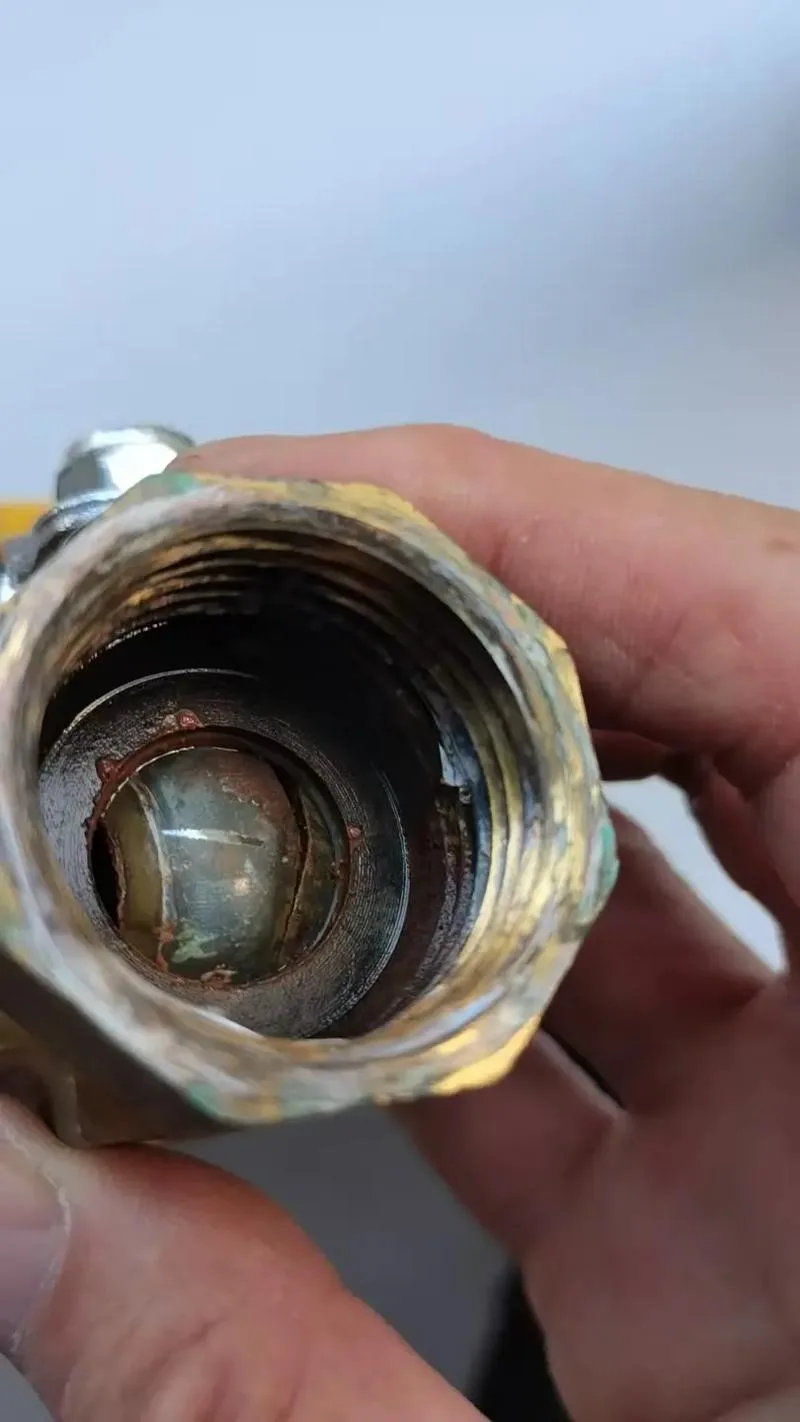
Visual inspection is a preliminary, non-destructive method used to identify potential sealing problems. It is simple to operate, but it requires the use of specialized tools, such as magnifying glasses or endoscopes. Inspect for surface damage (wear, scratches, cracks, deformation, corrosion) that may lead to leakage, with a particular focus on sealing surfaces, such as the disc and seat. Grooves or pits deeper than 0.1mm compromise performance.
· Filler box inspection: Observe for signs of medium leakage (e.g., oil stains or powder) at the filler box. Leakage indicates aging, wear or insufficient clamping force of the packing (typically 5-10 MPa).
Judgment criteria: No visible damage or leakage signs are considered qualified. If problems are found, they should be repaired and retested to ensure the issue is resolved. Data example: According to API 598 standard, the roughness Ra of the sealing surface should be ≤ 0.8 μm; otherwise, the sealing performance will decrease by more than 20%.
II. PRESSURE Inspection
Pressure testing is the core method used to simulate operating conditions and verify valve strength and sealing integrity. Typically conducted before installation or after maintenance, it uses water, air, or oil as the medium, with test pressures set at 1.1-1.5 times the rated pressure. The procedure lasts 5-15 minutes, during which leakage or deformation is observed.
1. Strength tests
· Operation steps: close the valve, fill the medium (water or air) into the valve body with a specified pressure, keep it for a period of time, and observe whether there is leakage or deformation in the valve shell, packing box and other parts.
· Judgment criteria: no rupture of shell, no obvious deformation, and no significant decrease in pressure (≤5%), indicating that the valve strength is qualified and the sealing performance is initially good.
Data table: common valve strength test parameters (based on GB/T 13927)
|
Type of valve
|
Test pressure (MPa)
|
Duration (min)
|
Allow pressure drop (%)
|
| sluice valve | 1.5 × PN | 5-10 | ≤2 |
| ball check | 1.1 × PN | 10-15 | ≤5 |
| flygate | 1.5 × PN | 5 | ≤3 |
PN is the nominal pressure; for example, the PN16 valve test pressure is 24 MPa.
2. Seal test
· One-way seal test (applicable to check valve): charge the medium from the inlet end, reach the specified pressure, and observe whether there is leakage at the outlet end. If there is no leakage, the one-way seal performs well.
· Bidirectional sealing test (applicable to ball valve and gate valve): fill the medium from both sides respectively, and observe whether there is leakage on the other side and the packing box under the specified pressure. If there is no leakage on both sides, the bidirectional sealing performance is good.
Leakage level standard (GB/T 13927-2022):
|
grade
|
Leakage rate (ml/h·cm)
|
Applicable valve type
|
| A | ≤0.03 | Metal sealing valves |
| AA | ≤0.003 | Soft-seal valves |
| B | ≤3 | low pressure valve |
No visible leakage is regarded as grade A qualified.
III. Bubble detection method
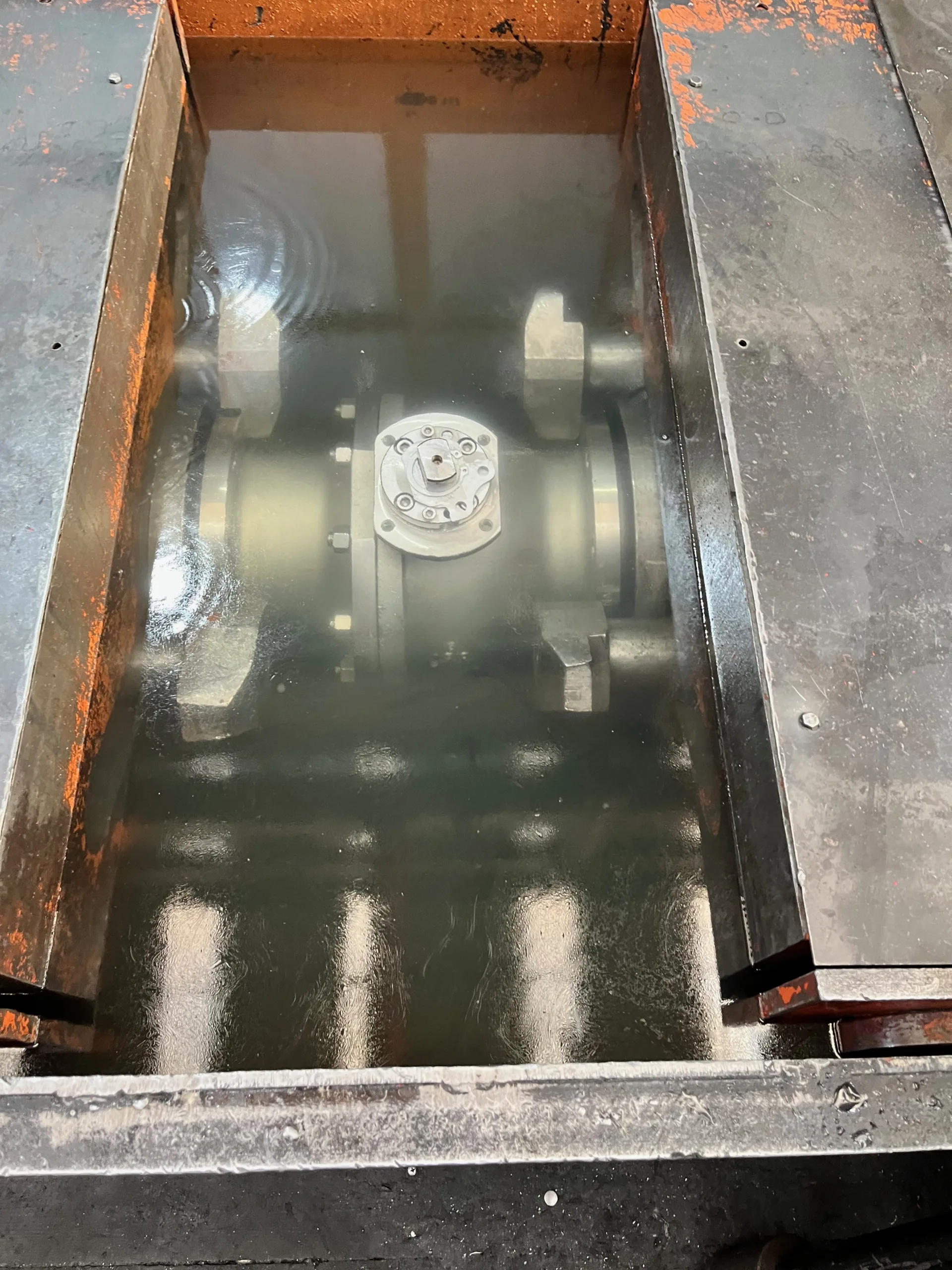
Suitable for low-pressure valves (such as gate valve, ball valve, and butterfly valve with PN ≤ 1.6 MPa and DN ≤ 400 mm).
· Operation steps: put the valve in water, close the valve, and introduce 0.2-0.5 MPa gas into the valve body, and observe whether bubbles are emerging around.
· Judgment criteria: no continuous bubbles (allowing instantaneous ≤5 per minute), good sealing performance; bubbles indicate leakage.
Figure: Bubble detection process
The image failed to load
View link
(Note: After water immersion, observe the location of bubbles to locate the leakage point)
IV. Ultrasonic testing
Non-contact method, suitable for valves in operation.
· Operation steps: Close the valve and apply medium pressure, and use the ultrasonic detector to scan the sealing surface. The leaking medium generates an ultrasonic signal (with a frequency of 20-100 kHz), which is captured and analyzed by the instrument.
· Judgment criteria: signal strength is less than or equal to the threshold (e.g., <50 dB) without leakage; higher than the threshold indicates the location and degree of leakage (minor/severe).
Data example: detection accuracy up to 0.01 mm gap, suitable for high-pressure valves (>10 MPa).
V. Pressure reduction detection
Suitable for online monitoring.
· Operation steps: Install pressure sensors (accuracy 0.5%) before and after the valve, and monitor the pressure change after closing the valve (every 1-5 min).
· Judgment criteria: pressure drop is less than or equal to the allowable range (for example, <1% / h), and the seal is good; exceeding the range (e.g.,>2% / h) indicates leakage. It depends on pipeline stability and medium characteristics, so a comprehensive analysis is required.
Table: Pressure drop allowable values (API 598 reference)
|
Medium type
|
Allowable pressure drop (%) /h)
|
Applicable pressure (MPa)
|
| water | ≤0.5 | <5 |
| gas | ≤1.0 | 5-10 |
| oil | ≤0.8 | >10 |
Summary: No Proper valve sealing requires a combined approach: visual inspection for initial screening, pressure testing, and advanced detection for leak verification. Standards depend on valve type, with periodic tests every 6-12 months. Key factors include seal surface quality, pressure differentials, and medium corrosion. Observe safety precautions (protective gear), and ensure high-pressure testing is performed professionally. Special valves may refer to GB/T 12243. standard.
reference material
- GB T 13927-2022: Pressure test of industrial valves. Link
- API 598-2009: Valve Inspection and Testing. Link https://alliedvalveinc.com/the-valve-expert/api-standard-598/
- ISO 5208:2015: Industrial Valves-Pressure Testing of Metallic Valves. Link https://www.valvespecifications.com/testing/valve-leakage-class
- Industrial valve sealing test method. Link http://www.valve-inspection.com
- Valve sealing grade and selection. Link https://zhuanlan.zhihu.com/p/519133545
- Valve Testing Methods And Standards. Link https://www.everlastingvalveusa.com/valve-testing-methods/
